Sunday, September 27, 2015

Beehives No. 3...

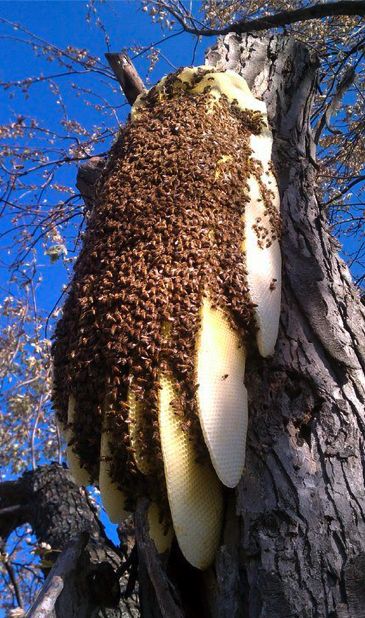
Further to our previous post: Bees, Boles and BearsBeehives 1 and Beehives 2, this post is to share an exciting new form of beehive which is minimally invasive on bees at the time of harvest, and so much easier to harvest from. No more masks and spaceman suits. The modern apiarist is about to change...


First though, we had planned to make some ornamental beehives for the potager garden or orchard. The beehives we previously had on the farm have moved on, but we still want to have honey bees as they need protection, and we need them to pollinate all our fruits trees and provide our guests local honey.   We had decided to essentially build a more decorative version of the standard Langstroth hive that most people would be familiar with.


I came across these photos of some ornamental hives that have been built for the rooftop of Fortnum and Mason in the middle of Piccadilly which I liked and planned to model our new hives on....


I love the design of their hives, as well as that F&M colour. The shape reminds me of a diagram I found of an antique beehive...


The langstroth hive has been the standard type of hive for eaons. Although they are better for a colony than a woven skep, which can only be harvested with the compete destruction of the hive, their time has come to an end...


The flow frame is perfect for novice apiarists like ourselves because of the ease with which you can harvest the honey.


One just inserts a tube and cranks a lever and away it flows...

Here is a video clip explaining how this new system works. We will definitely be supporting Flow Hives.


We plan to have the best of both worlds - we will buy three complete flow hives and then add ornamental woodwork to the outside, such as creating a little front porch over the main door; and paint them a similar colour to the F&M hives (actually a duck egg blue to match the trellis obelisks in the potager).


We already have a friend who can get us a swarm of bees.

Now we just need to decide where at Willowbrook to make our bee garden. Perhaps Spencer's Corner, or Little Hollows?


Sunday, September 13, 2015

Lazy Cycle Sunday...


Recently, whilst staying with my father in Denver, we got to try out a pair of pedego bikes he had bought. Pedego electric bicycles of Newport are one of the best ebikes on the market, being known for their reliability and durability as well as performance. If you have never tried an ebike before, they are battery assisted bicycles, which can be used in 3 ways - the usual calory intensive way; assisted mode, where one pedals at one's own pace and the motor picks up the slack; or motor only, where one can sit back and just enjoy the ride. They are capable of 8 hours of unassisted riding per charge, or longer if you are intermittently peddling, and travel up to 30 kph on motor alone (all controlled by the twist of the wrist, like a motorbike.


Of all the models, I quite fancy the City Commuter (above and below).

So Peter and I thought it would be a neat idea to buy a pair for guests to use at Willowbrook. There are plenty of country cycle paths through native bush and along rivers, including a short walk / cycle path to a lovely picnic glad just a few miles down the road. Guests could take a lovely packed picnic lunch with them and go on a morning cycle tour of the countryside with a romantic picnic for lunch, and not have to worry about finding the energy to get home again!

Above: The shorter cycle path to the picnic area (*WBP)

Below: A slightly longer country ride along scenic country lanes.

Guests could recapture the excitement of their first bike...

in style...

One could rock the casual, nonchalant look...

or perhaps go the extra mile and done the country tweeds (like participants in the tweed run)...

although there are limits...

To ensure that special Willowbrook boutique experience we will trick the bikes out with traditional wicker hampers on the rear (which will nicely hide the battery pack). Full of gourmet goodies - fresh bread, cheese, fruit, strawberries and cream, and perhaps even bubbles for two!

as well as the hamper on the back, we can fit wicker pannier baskets on the front, like this lovely bicycle from Velorbis of Copenhagen...


Beg's bicycles of Cambridgeshire also do a nice line of vintage bicycle accessories...

such as leather seats and saddle pouches...
and blanket straps (perfect for the picnic-er)...

as well as several classically styled bicycles...

So whether it is a solitary ride into the country to sketch some watercolours...

A trip for two...

or a group outing...

one can do it in style and comfort when staying at Willowbrook Park.

Wednesday, August 19, 2015

Little Orphan Alex...

Peter and I are currently enjoying life in the slow lane, having taken our annual hols. We are visiting family in Denver before flying on to London later this week to catch up with friends and urban family there.

Before Peter left there was one small tragedy on the farm - one of the highland cows died during child birth, leaving behind a little bull calf one cold and wet night. Peter named him Alexander, and thanks to the help of our friend Sue, he is doing really well. Peter collected some colostrum from my uncle and set up a feeding system with a tank and a teat. After some coaching Alex got the hang off feeding from it. 


The first night he was born was the most touch and go, but getting the colostrum into him and getting him in to a warm shelter saved the day...


 Then we transferred him down the road to our friend Sue, who has been caring for him...


Now he is doing well and integrating with our highland calves from last year, who also live down the road, coincidentally next door to Sue...


They have been making him feel welcome...


I'll leave you with these short clips of Alex. When we get back from our hols there will be plenty of news to share, and some more progress photos as the builders are steaming ahead with all the interior marble now.

Saturday, July 25, 2015

Life In The Sloe Lane...


This week we have six sloe trees arriving to be planted in Badger’s Wood. We have waited patiently for several years to get our hands on some of these. There is only one nursery in NZ which grafts them, and for the last few years there has been a waiting list which outstripped supply due to a poor rate of the grafts taking. However, this year we were top of the list and have secured enough to grow our own little Blackthorn spinney within the woods.

Sloes (Prunus spinosa) are a member of the plum family, which grow wild in many places throughout Europe (and supposedly, according to Wikipedia, many places in New Zealand, although with years of searching we have not been able to find them growing in any of the hedgerows!).

Their common name of Blackthorn derives from the dark bark of the tree, which has large spikey spurs protruding from it. In the spring it blossoms with creamy white flowers which develop into a small highly astringent dark purple berry, known as a sloe. It is similar I guess to a Damson. 


The fruit is used for preserves and for fillings (once combined with an unhealthy amount of sugar to make it palatable); and also for making sloe gin, which is a liqueur made by steeping the sloes in large jars heaped with sugar and then topped with plain gin and left for 6 months.

Traditionally the fruits are picking after the first frost of autumn. The frost allows the fruits to start to bletch a little (although these days one could pick them any time and put them in the freezer to achieve this). I like the tradition of picking them after the first frost, it seems so much more in-tuned with the passing of the seasons and leaves one something to look forward to. 

Once picked, the fruits are then pricked several times piercing the skin. It is traditional to do this with one of the thorns from the bush itself. Once pricked one puts them in a wide necked jar or demijohn and for each pint of sloes (570 mls) one adds 4 Oz (110g) of sugar. The jar is then filled up with gin and left in a cool dark place for a minimum of 3 months, but much better 6 months (as when made sufficiently slowly the liqueur starts to take on a slightly almond-like taste as well, from the berry pips). 

Above photo from London Eats Blog

The sugar is vital not just to humour the bitterness of the berries, but to help draw the flavour out of them into the gin. Turn the jars every day for the first week, and then every week for the remaining time. The gin will take on a lovely deep crimson hue. At the end of this time carefully decant the gin into display bottles and label. Be careful not to discard the sloes as these will now make a nice filling for a pie, perhaps mixed with strewed apple to make them go further, or for creating sloe truffles!


 Sloe Truffles
To make sloe truffles put the left over fruit into a pan and gently simmer until there is minimal liquid left in the mixture and the fruit has softened well. Rub the sloes through a sieve to separate the pulp from the stones. Weigh the pulp, and then add the same weight again in sugar (would make a great treat for the festive season due to both timing of completing the gin and in not caring about what one's waistline does for that month). Simmer again until all the sugar has fully dissolved (one does not want a crystalline filling). Scrape into a jar and leave to set. At this point you can also use this sloe mixture on biscuits with cheese, like quince paste).  To make truffles blend the mixture with an equal amount of dark chocolate (or milk if you prefer), roll into little balls. Allow to set and then dust with cocoa powder and enjoy.

Related Posts Plugin for WordPress, Blogger...