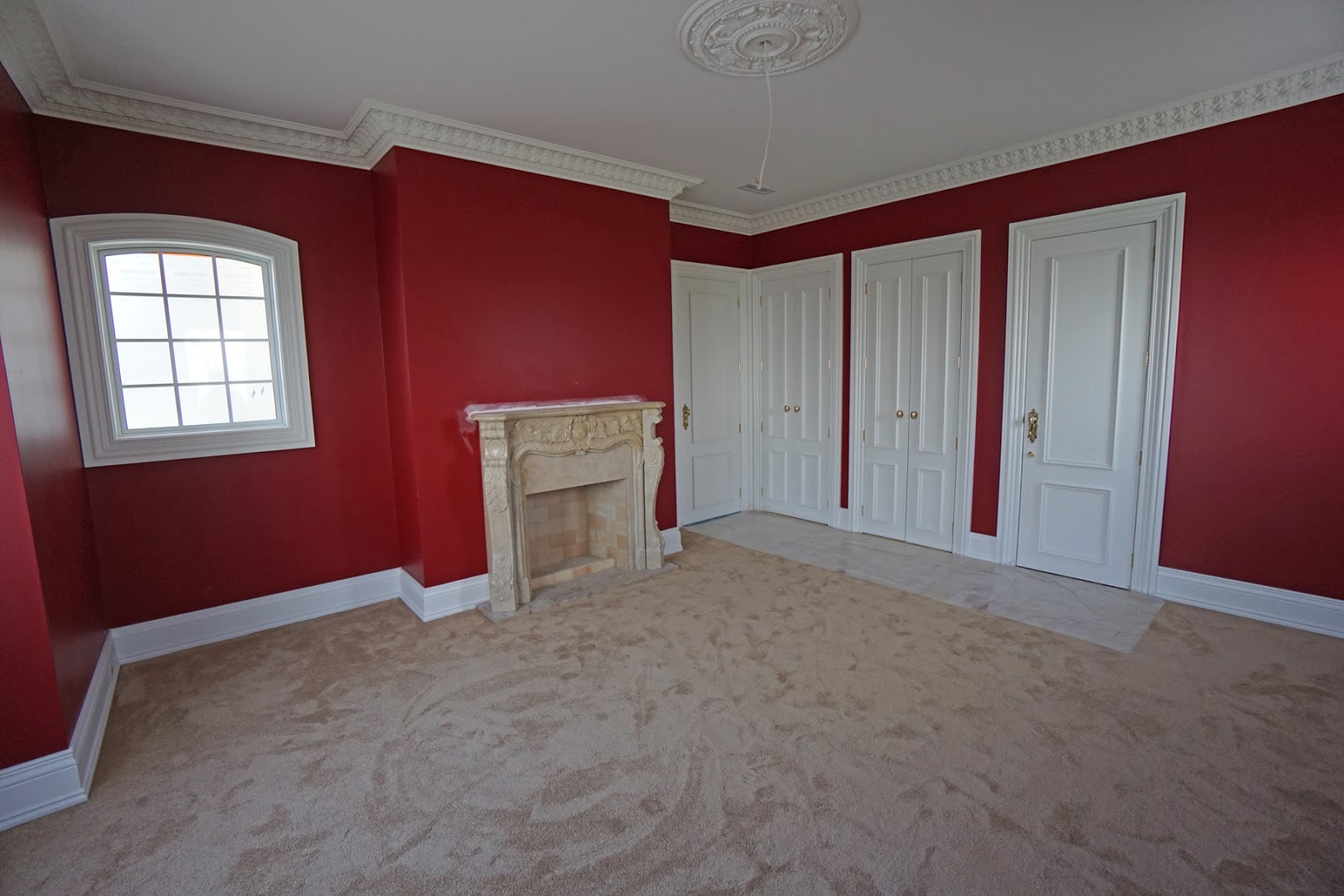
Willowbrook Park is designed in the neoclassical style popular for country houses in the 18th century. Having watched many documentaries over the past few months on 18th century art, architecture, history, politics, the enlightenment, and the rulers who dominated this period in history, I thought it would be interesting to create a gallery of the royals who would have been on the throne had WBP been built in the 18th century. Let's start in England...

George III, King of Great Britain and Ireland & Elector of Hanover
House of Hanover
(Reigned 1760-1820)
George has become known in popular history as the mad king who lost the Americas. It was once thought that he may have had porphyria, an illness of haem enzymes in the blood leading to a build up of porphyrins which may cause abnormal pigmentation of the skin, sensitivity to light, confusion / delirium, and darkness or purpleness of urine. This was based entirely upon a bluish colour to his urine and his bouts of madness. It is now thought that he may simply have been mentally ill, and that the discolouration of his urine may have come from taking tonics containing gentian violet, a common ingredient of tonics of that time.
It is oft forgotten that he reigned longer than any English monarch before him, was an enthusiastic patron of science, especially astronomy and agriculture. He oversaw the expansion of the British Empire into India, and defeated Napoleon during the Napoleonic wars. The truth is probably that he was more a victim of circumstance and illness than anything else.
It is oft forgotten that he reigned longer than any English monarch before him, was an enthusiastic patron of science, especially astronomy and agriculture. He oversaw the expansion of the British Empire into India, and defeated Napoleon during the Napoleonic wars. The truth is probably that he was more a victim of circumstance and illness than anything else.

Gustav III King of Sweden
House of Holstein-Gottorp
(Reigned 1771-1792)
Gustav III was the nephew of Frederich the Great. He ascended the throne after his father's death and seized power back from parliament in a coup d'etat, venturing to reclaim royal autocracy. He was one of the many "enlightened despots" of the time, who funded many cultural, artistic and educational programs. This however, did not make him the most popular monarch, as he was accused of squandering the public purse. He tried to support Louis XVI following the French Revolution, and to form an alliance of European monarchs. He came to a grizzly end, being mortally wounded by a gunshot to the lower back during a masquerade ball.
.jpg)
Catherine The Great, Queen of all the Russias
House of Romanov and House of Ascania
(Reigned 1762-1796)
Catherine the great was perhaps the greatest of the enlightened despots. Born Princess Sophia, a minor royal in Prussia, she married the wet juvenile fop Peter III, who was more interested in playing with toy soldiers than ruling the country. He was assassinated with the help of her lover, Grigory Orlov. Catherine assumed power. She ruled with an iron fist, but was heavily influenced by philosophers such as Voltaire and Locke - meaning she desired to create an enlightened Russia under her rule. She set up various artistic, cultural, and educative initiatives, such as creating the Hermitage Museum and the National Library. She instituted a state education system, believing everybody deserved to be able to read and write, including women. She expanded the Russian empire and its standing in Europe, securing better trade and economics. For all this though, the Russian feudal system did mean that there was a great discrepancy between the vast number of peasants, the middle classes, and the nobility.

Louis XV (Above) and Louis XVI (Below)
House of Bourbon
(Louis XV reigned from 1715 to 1774; Louis XVI reigned from 1774 until he was beheaded in 1792)
%2C_rev%C3%AAtu_du_grand_costume_royal_en_1779_-_Google_Art_Project.jpg)
Autocrats who lived a sybaritic life at Versailles, surrounded by their noble courtiers. Supporters of the arts, mainly when used to show off their power and wealth. Not half as enlightened as other rulers. Suffered the ultimate defeat in the French revolution.

King Charles III of Spain
House of Bourbon
(Reigned 1759-1788)
Became Duke of Parma when he was 15. Eventually conquered the kingdoms of Sicily and Naples. Later, when he succeeded to the throne of Spain, abdicated the thrones of Sicily and Naples to his 3rd Son, Ferdinand, and returned to Spain. As another enlightened absolutist he tried to reform Spain, by loosening the grip of the church, promoting science and industry, creating universities, and using diplomacy to avoid wars. Despite this he had to borrow large amounts of money for his reforms, which did not survive after his death.

King Frederick V of Denmark and Norway
House of Oldenburg
Reigned 1746-1766)
Freddy was George III's sister's husband. He spent most of his life drinking and womanizing. Luckily his rule was dominated by trustworthy ministers who managed to steer the country clear of European wars and expand the economy. The king wasn't really interested in affairs of state, nor cultural or scientific advancement, although the kingdom seemed to prosper none-the-less during his reign thanks to decent chaps advising him, keeping him out of trouble and keeping the country ticking over whilst he passed his time in drunken idleness. He died aged 42 after braking his leg whilst drunk.

King Frederick The Great, King of Prussia and Elector of Brandenburg
House of Hohenzollern
(Reigned 1740-86)
King of Prussia for 46 years. Notable military success in extending the boundaries of his kingdom, but also for his commitment to the enlightenment: to philosophy and the arts.
He was a talented man in many ways, being an extremely accomplished flautist, composer (composing over 100 sonatas for flute and 4 symphonies), and having more than a passing interest in architecture. He commissioned and helped design many glorious buildings, including the Berlin State Opera, The Royal Library, St Hedwig’s Cathedral, Prince Henry’s palace, but most famously his beloved residence Sans Souci in Potsdam. It is one of the most important buildings in northern Germany to built in the Rococo style.
He was educated by Huguenot governesses, and was fluent in both French and German at a young age (preferring to speak French among family and close friends).
It is thought by many historians based on personal letters, accounts and documented relationships that Frederick was gay. At the age of 16 he formed a devoted attachment to a page boy Peter Karl Christopher Keith. Later he was to transfer his devotions to another. He had a close teenaged companion, Hans Hermann van Katte, whom his father despised. Frederick and Hans planned to run away together, but when his father found out he had Hans beheaded in front of Frederick and forced him to watch. He then incarcerated Frederick for over a year.
Round about this time he was promised in marriage to the daughter of George II of England, but this proposal was scuppered by the Austrians who feared an Anglo-Prussian alliance. Eventually he married Elisabeth Christine of Brunswick-Bevern, but did not spend any time with her, in fact he forbade her to visit him in his palace at Potsdam, instead bidding her remain in a separate residence, Schonhaussen Palace. He did visit her once a year though, just to be polite. He left his throne to his nephew, Frederick William II.
He did maintain several long-term friendships with men, including a long running friendship with Voltaire, whom he invited to live with him a Sans Souci (lived with Freddy there for 3 years, then they had a big falling out, but eventually made up).
He was responsible for modernising Prussian bureaucracy and the judicial system, opening it to men of non-noble birth and trying to put his enlightened values into practice.
Through his reign he waged a succession of wars and was involved in numerous wars of succession. As a military leader he was an excellent strategist and was not afraid to lead his men into battle. He was held as a heroic and honourable leader throughout most of Europe, his glory sadly declining after the second world war due to the fact that the Nazi party had also venerated him (the only piece of art to be found in Hitler’s bunker at the end of the war was Frederick’s portrait).

Joseph II, King of Germany, Holy Roman Emperor, Arch Duke of Austria, King of Hungary and Croatia and King of Bohemia.
House of Habsburg
(Reigned 1764-1790)
Born of the Austrian House of Habsburg, he was the son of Maria Theresa and brother of Marie Antoinette. He is held with Frederick the Great and Catherine the Great to be one of the three greatest enlightened absolutists. His policies to modernize his territories became known as Josephism. Emancipation of the peasantry, freedom of worship, and education for all were his most important reforms.
The freedom of worship was partly about religious tolerance, but also about decreasing the church's grip on power. The liberation of the serfs from the feudal system was due to philosophical and moral beliefs, and to encourage free trade and economic freedom.
He was described by Frederick The Great as "Ambitious and capable of setting the world on fire". Alas, he did not succeed in convincing bureaucrats of his ways, which he saw as fair and logical and "unable to be met with pardonable opposition". Alas, they met with much opposition and his reforms did not last beyond his reign.
He was married to Princess Isabella of Parma, the granddaughter of the King of France. They were not lucky in procreation, with many miscarriages, and premature births brought on by small pox, to which Isabella would eventually succumb. He had no sons and was succeeded by his younger brother, Leopold.
.jpg)
Leopold II, Grand Duke of Tuscany
(and later successor to all of his brother's territories - Joseph II above)
(Reigned 1765 - 1790)
Took over his father's legacy in Tuscany, which had changed little since the reign of the Medici. He was seen as cold and aloof and was not popular with his Italian subjects. His ecclesiastical reforms did not engender him to them either, nor to the Pope. He sought, like many rulers of the enlightenment, to decrease the grip of power that the Church held over the state and over society. It is interesting that in his youth, like many second sons of noble birth, he had once been in training for the priesthood.
He had next to no military power. So set about with reform and diplomacy. He bought in a bill of rights, over saw health reforms, including a small pox vaccination program and legislature to protect the mentally ill from mistreatment. He left Florence to take over the affairs of his brother in Vienna when he succeeded as King of Germany, Archduke of Austria and the Holy Roman Emperor.
There he undid the emancipation of the Bohemian serfs by his brother, forcing them back into servitude, which was an attempt to placate Bohemian nobles in order that he may retain as much power of the state as his mother and brother has gained.
Once he succeeded as holy roman emperor he found his territories threatened by Prussia, the Russians, and the civil unrest in France. The next 2 years were spent protecting his territories and playing diplomatic power games with the other royal houses of Europe. He died suddenly and unexpectedly aged 44, which some have speculated was due to poisoning. He left behind him 16 children, including Franz II who became the last Holy Roman Emperor and Ferdinand III, who became Grand Duke of Tuscany.

Stanislaw II August, King of Poland
House of Poniatowski
(Reigned 1764-1795)
A patron of the arts and sciences, but over all an ineffective king, who was to be the last Monarch of the Polish-Lithuanian commonwealth. Spent his early life travelling around the courts of Europe progressing through a variety of diplomatic and bureaucratic positions. At one stage was romantically involved with Catherine the Great (when she was 26, before she was 'the great'). He was elected King after the death of August III King of Poland, with a significant amount of support form Catherine, who no doubt thought that a pro-Russian, anti-Prussian king would be of benefit to her causes. The Polish parliament railed against his reforms and slowly through a series of rebellions and political measures, removed more of the sovereign's powers when it came to appointing military and political positions, awarding crown lands, and ennobling people. Both Russian and Prussian factions were also involved in protesting against reforms, and so too the church which stood to loose power under his reforms.

Joseph I, King of Portugal
House of Braganza
(Reigned 1750-1777)
Cousin of Maria Theresa of Austria through his mother (her aunt).
Was mad about opera, and hunting.
With the help of his ally, the British, he brought about staggering defeats of the Spanish and French during the 7 years war, after they had demanded Portugal end its alliance with the Brits. He made the Marquess of Pombal his first minister and through him managed to gain control of public education and the wealth of the church, expelling the Jesuits. Pombal, however, was seen by most of the nobility as arrogant and overreaching, and upon Joseph's death his heir, Maria I expelled Pombal.
This concludes our tour of 18th century royal rogues and high-handed heroes. If you liked the period portraits, you might also like our previous posts "The Gentleman in Art" & "Portrait of a Lady".
PS- I don't know why google blogger won't justify text, instead wanting to centre it when published, even though it appears justified in draft format. Annoying.